Bring land into the pool.
Residents and institutions offer parcels with boundaries, access windows and permitted uses. Land can remain separately owned.
The vision / Shared regenerative systems
A community’s growing spaces. One coordinated system. We’re building toward humanoid robots and small imaging drones growing food wherever the land makes the most sense.
A productive landscape is never finished.
Our direction is shared stewardship: towns, villages and municipalities could buy or lease a system serving land contributed by their community. Site intelligence would coordinate a shared fleet across those parcels.
Share access to the system across a community. Members contribute eligible land; GardenOS would decide what to grow, where and when, within agreed goals and permissions.
Residents and institutions offer parcels with boundaries, access windows and permitted uses. Land can remain separately owned.
The system would match crops to soil, sunlight, water and climate, balancing community needs, rotations, biodiversity and fleet capacity.
Small drones image the parcels. Humanoids plant, tend and harvest suitable crops, coordinated with people and irrigation.
Observations and harvests inform the next growing cycle. Each site keeps its history as robots move between assignments.
Proposed distribution: municipal purchase or lease. Pricing, operating economics, participation terms and produce allocation remain to be validated with communities.
GardenOS is the future operating layer beneath this vision: deciding which biological work needs to happen, where, when, why, and which machine, system or person is best equipped to perform it.
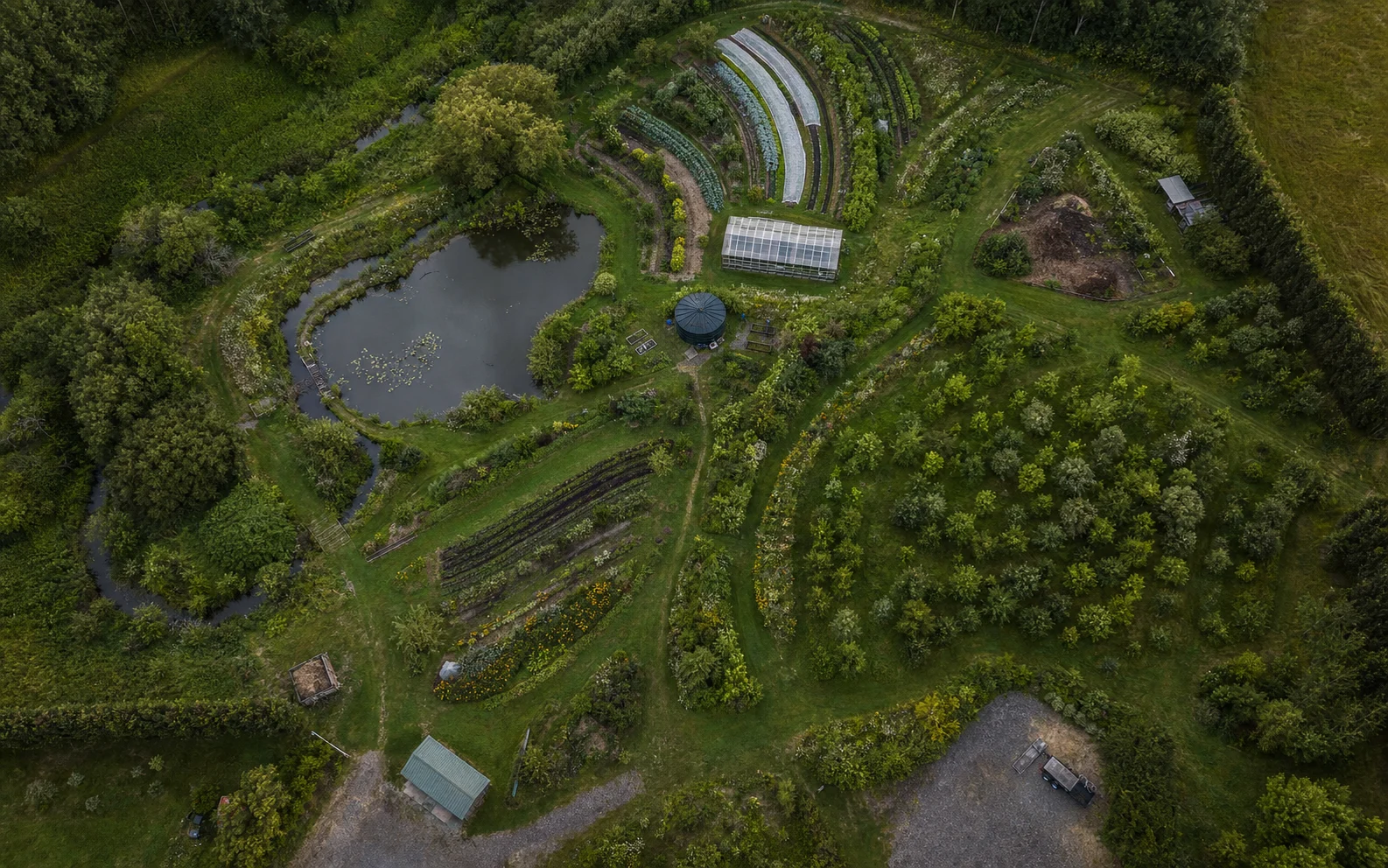
Drone imagery, ground observations, soil, water and weather would update each parcel’s own ecological and operating record.
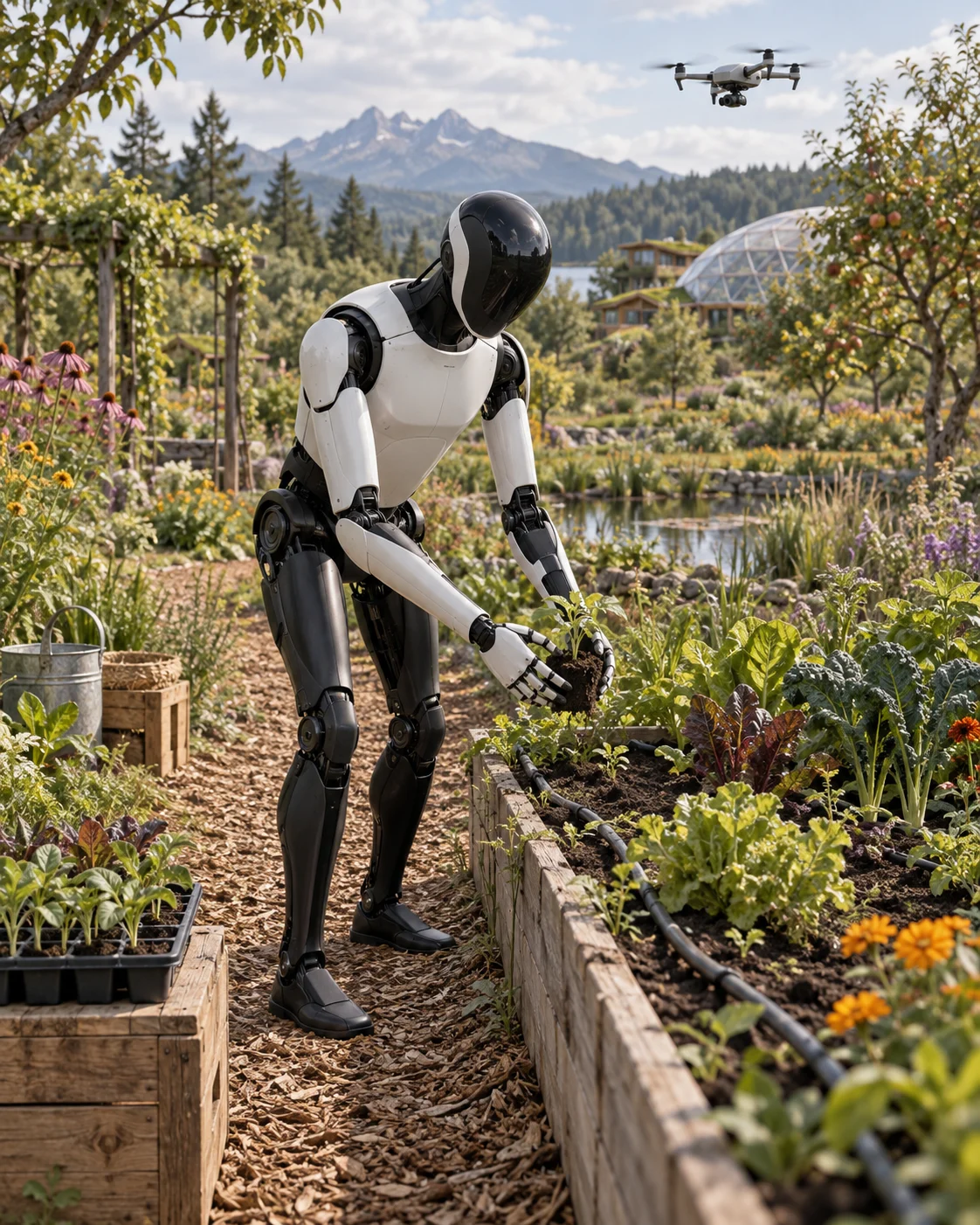
Our robotics bet is humanoids supported by small imaging drones. Dexterous physical work and aerial observation would serve mixed crops, living soil and layered perennials, directed by GardenOS.
Repeat imaging helps track growth and flag changes for closer ground inspection.
Planting, tending and harvesting are target tasks to validate with suitable platforms and tools.
The Digital Twin and operating history stay with the site as shared robots move, change or are replaced.
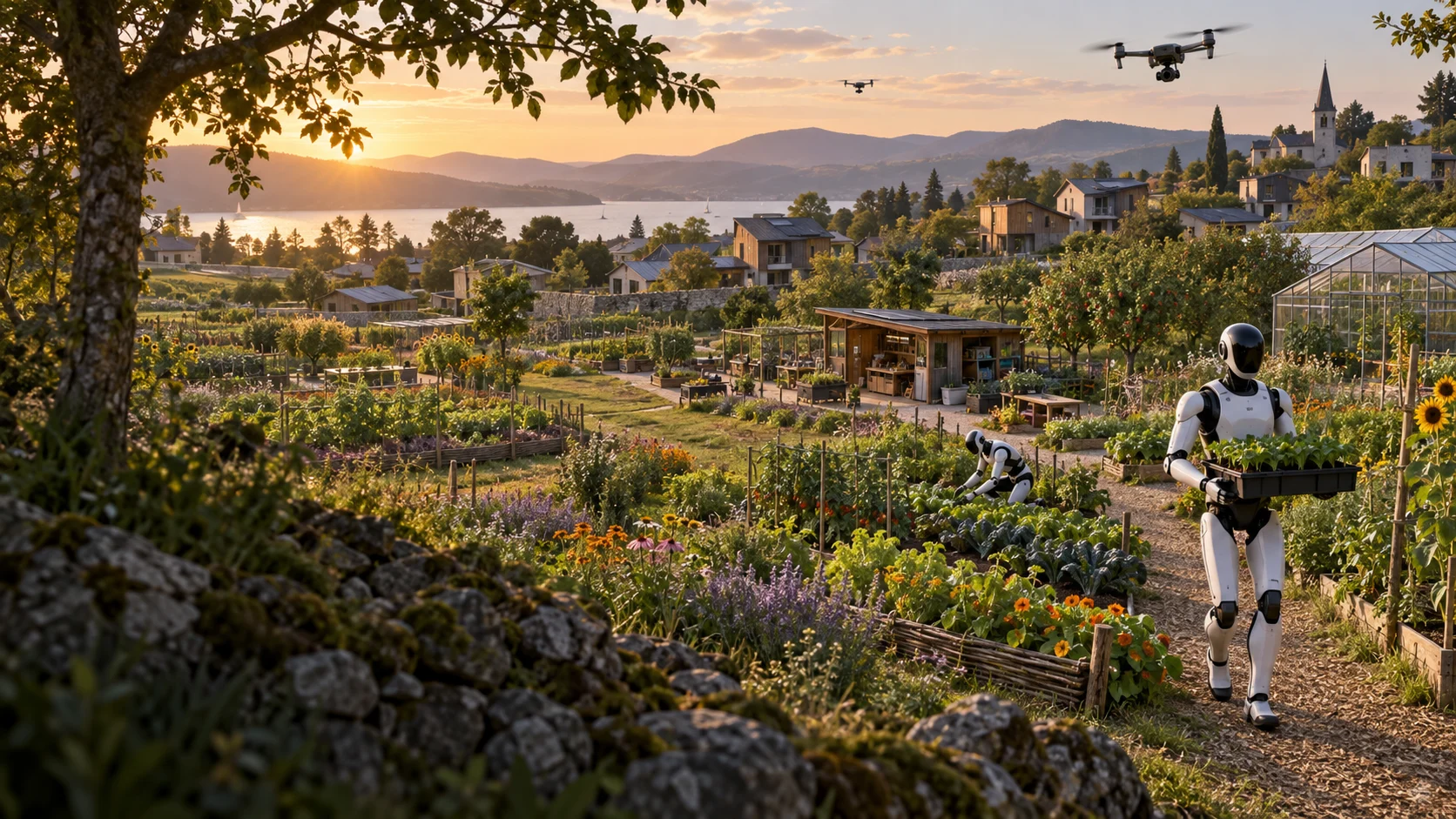
Separate parcels can contribute to a common production plan. Built for communities worldwide, with each site’s climate, ecology and operating conditions shaping the decisions.
Towns, villages and municipalities sharing a fleet across participating land.
Market gardens, orchards, nurseries, farms and controlled growing environments.
A secondary option for families with substantial land and the resources for a dedicated system.
We are growing food, not building gardening robots. The aim: useful harvests, healthier soil, careful water use and richer habitats, measured over seasons.
Eden is in early development. The images and operating scenarios on this page illustrate the future direction.
Our sole primary software MVP: site understanding and regenerative production design. Prove the workflow on a real site.
Explore the current proof ↗Develop observation, planning, operating history and coordination around the enduring site Digital Twin.
Validate humanoid and drone tasks, then the economics and operations of a community fleet. Purchase and lease models remain hypotheses.
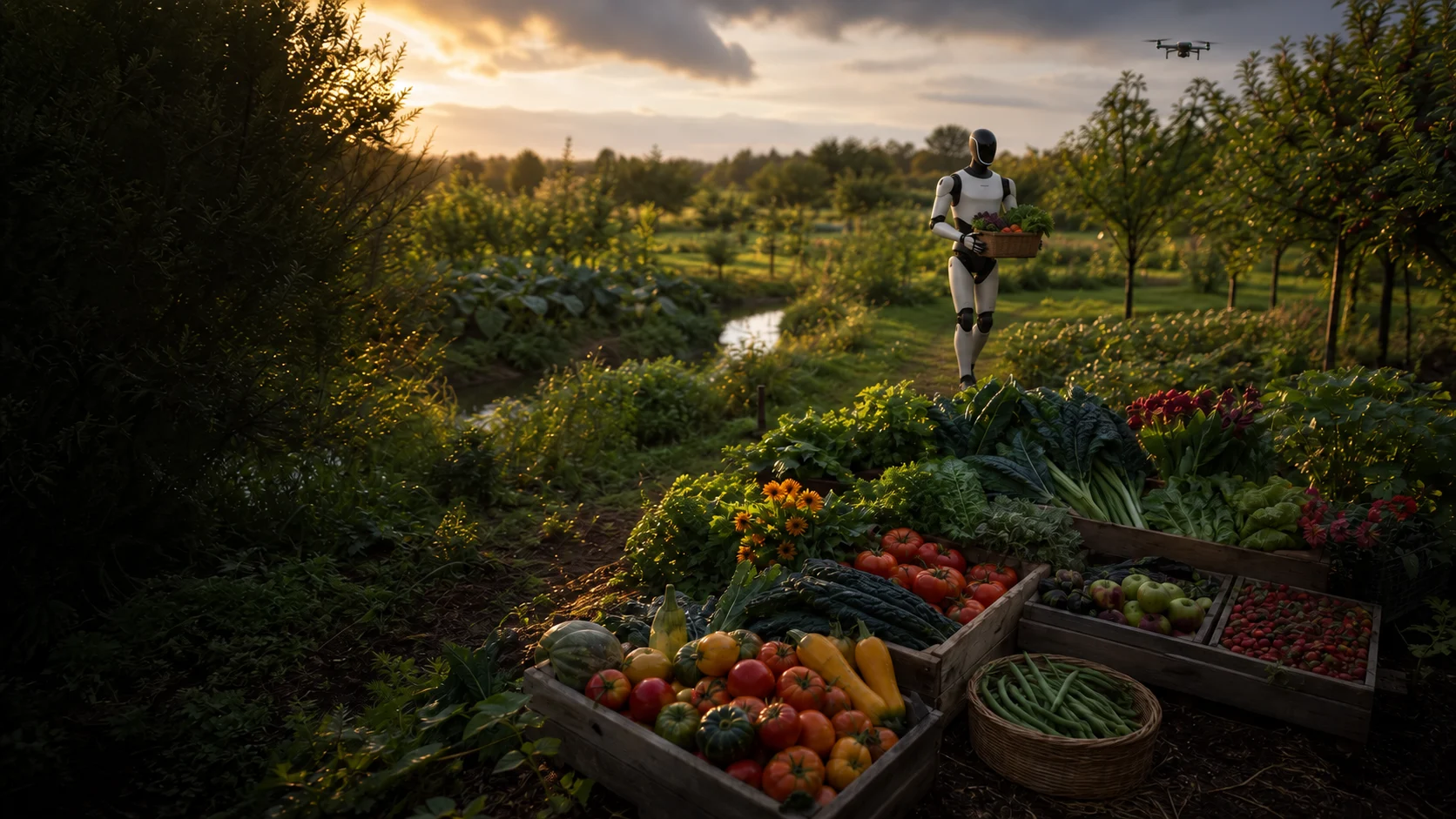
The future is cultivated
Exploring shared food production for your town, village or community?
Help shape how the system should work.